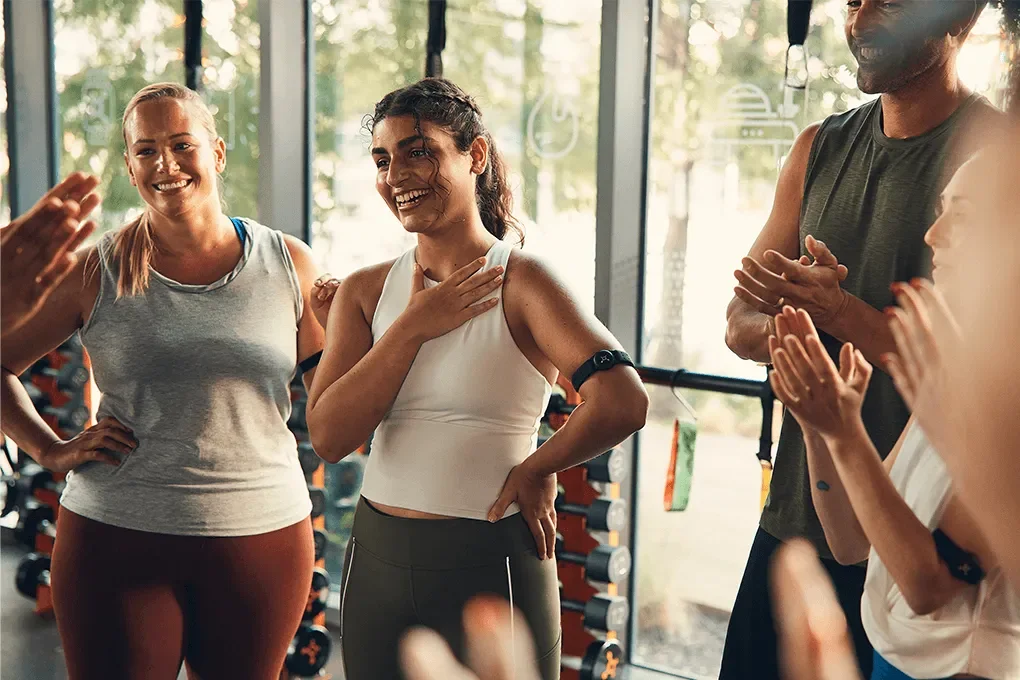
Fitness as Self-Love: How the Gym Replaced the Club
I remember when working out meant burning off what you ate the night before.
It was reactive. It was punishment.
It was penance for dessert.
It was “two hours on the treadmill because I messed up.”
Now I’m watching something different.
Millennials and Gen Z aren’t just working out to lose weight. They’re training for stability. They’re lifting for clarity. They’re building something in a world that feels unpredictable.
And as someone rebuilding my own strength at 40, I see both sides.
I lived through the “shrink yourself” era.
I’m stepping into the “build yourself” era.
The difference is profound.
What changed?
Why did the gym quietly replace the club, the bar, even some traditional gathering spaces?
And more importantly — is this shift actually healthy?
Let’s unpack it.
The Gym as the New “Third Place”
Sociologists often reference the concept of a third place, a space outside of home (first place) and work (second place) where people gather, connect, and build community. Historically, that’s been churches, neighborhood bars, barber shops, coffee houses.
For a while, nightlife held that role for younger generations. Clubs were social currency. Weekends revolved around alcohol, loud music, and curated social experiences.
Now?
The 6 a.m. gym crowd looks like what the 10 p.m. club crowd used to be.
Why?
Because the gym offers something nightlife doesn’t: measurable progress.
In a digital world where everything is filtered, strength is honest.
You either lifted it or you didn’t.
You either progressed the weight or you didn’t.
There’s something grounding about that. In a culture of algorithms and endless scrolling, strength training offers friction. It’s tangible proof that effort equals adaptation.
And for Gen Z especially a generation that grew up online that tangible feedback loop matters.
The gym is social, yes. But it’s productive socializing. It’s proximity to people who are working on themselves. It’s shared discipline.
The club says, “Escape.”
The gym says, “Build.”
That shift is cultural and psychological.
Fitness as Nervous System Regulation
There’s another layer here that doesn’t get talked about enough.
Strength training is not just aesthetic. It’s biochemical.
When you lift:
Cortisol levels can normalize over time.
Endorphins increase.
Dopamine rises.
Insulin sensitivity improves.
Sleep quality often improves.
Mood stability strengthens.
You’re not just building muscle.
You’re stabilizing your nervous system.
Modern life is overstimulating. Notifications. News cycles. Financial pressure. Relationship instability. Career volatility.
Your body absorbs all of it.
When you train consistently, you create a controlled stressor. You apply tension in a safe environment. You adapt. You recover. You repeat.
That process teaches your nervous system something powerful:
“I can handle stress and come back stronger.”
That’s why so many people say they feel calmer after lifting.
It’s not vanity. It’s regulation.
For Millennials navigating burnout and Gen Z navigating uncertainty, the gym becomes a place where chaos is replaced with structure.
Reps. Sets. Progressive overload.
Predictable effort. Predictable outcome.
That predictability feels safe.
From Punishment to Construction
If you’re old enough to remember early 2000s fitness culture, the messaging was different.
“No pain, no gain.”
“Sweat it out.”
“Earn your food.”
“Nothing tastes as good as skinny feels.”
It was about shrinking. Reducing. Restricting.
Fitness was framed as atonement.
New messaging is different:
“Build your body.”
“Progressive overload.”
“Fuel for performance.”
“Strong is safe.”
This matters more than it sounds.
Punishment creates burnout.
Building creates identity.
When you train to erase flaws, you eventually resent the process.
When you train to build strength, you start identifying as someone capable.
Identity shift is what sustains habits.
“I work out because I hate my body” has an expiration date.
“I train because I’m building something” compounds.
And here’s where I stand personally.
At 40, rebuilding my own strength, I’m not trying to be smaller. I’m trying to be stable. I’m trying to preserve muscle, protect my joints, regulate hormones, and maintain clarity.
That’s a different motivation.
It’s not reactive. It’s proactive.
The Mental Health Layer
There’s a reason mental health conversations are now intertwined with fitness conversations.
Gen Z openly talks about anxiety, depression, ADHD, nervous system overload. They are far more transparent about psychological strain than previous generations.
The gym becomes a coping mechanism but not necessarily in a destructive way.
Physical exertion:
Reduces symptoms of mild to moderate depression.
Supports executive function.
Improves focus.
Enhances emotional resilience.
It’s embodied therapy.
And unlike traditional therapy (which is still critical), lifting offers immediate somatic feedback. You walk in dysregulated. You walk out steadier.
That immediate feedback loop reinforces the habit.
You feel better → you return → you build consistency → you gain identity reinforcement.
That’s powerful.
But there’s tension here too.
When Fitness Stops Being Self-Love
We need balance.
When fitness becomes:
Your only identity
Your sole emotional coping mechanism
Your social currency
Your validation source
Your punishment system in disguise
It stops being self-love.
It becomes self-avoidance.
There’s a thin line between discipline and obsession.
The algorithm amplifies physiques. The mirror amplifies insecurity. Social media amplifies comparison.
So while the gym replacing the club is arguably healthier, it’s not automatically pure.
Some people swapped alcohol for orthorexia.
Some swapped hangovers for body dysmorphia.
Some swapped social anxiety for performance anxiety.
The environment changed. The inner work didn’t.
Self-love through fitness requires internal alignment.
Are you building because you value yourself?
Or are you building because you’re afraid of losing relevance?
That distinction matters.
Why This Shift Makes Sense
Despite the risks, I believe this generational shift makes sense.
We are living in:
Economic uncertainty
Delayed home ownership
Delayed marriage trends
Remote work isolation
Digital overstimulation
Political instability
In unstable environments, humans crave structure.
The gym provides:
Routine
Metrics
Community
Identity
Agency
When you can’t control the market, you can control your macros.
When you can’t control politics, you can control your training split.
When relationships feel unstable, you can control your deadlift progression.
That agency is stabilizing.
And for Millennials entering their late 30s and 40s, there’s another factor:
Longevity.
We watched our parents decline earlier than necessary due to inactivity, stress, and poor metabolic health. We saw the cost.
So we train not just for aesthetics — but for capacity.
Can I carry groceries easily?
Can I travel without pain?
Can I keep muscle as hormones shift?
Can I stay independent as I age?
That’s long-term thinking.
That’s maturity.
The Evolution of Self-Love
Self-love used to be marketed as bubble baths and affirmations.
Now it looks like:
Early bedtimes.
Meal prep.
Saying no.
Tracking lifts.
Consistency over chaos.
It’s less aesthetic. More structural.
It’s not glamorous. It’s disciplined.
And discipline — when chosen freely — can be one of the highest forms of self-respect.
But it has to be grounded.
You cannot build your body while neglecting your mind.
You cannot regulate cortisol while constantly comparing yourself.
You cannot call it self-love if the voice in your head is cruel.
The gym is a tool. Not a personality.
Practical Takeaways
If you’re navigating this era whether you’re Gen Z, Millennial, or rebuilding at 40 like I am here’s how to keep fitness aligned with self-love.
1. Train to Build Strength, Not Erase Flaws
Shift the internal narrative.
Instead of: “I need to fix this.”
Try: “I’m building capacity.”
Language matters. Your brain listens.
2. Track Performance Metrics Not Just the Scale
Strength progression. Reps. Endurance. Recovery time.
The scale fluctuates. Performance compounds.
Progress that you can measure builds confidence that lasts.
3. Let Discipline Calm You, Not Control You
If missing one workout spirals you into shame, that’s not self-love.
Consistency is powerful. Rigidity is fragile.
Fitness should anchor you — not imprison you.
The Bridge Forward
The gym replacing the club isn’t just about aesthetics.
It reflects a generational pivot toward agency, structure, and embodied resilience.
We’re not trying to disappear anymore.
We’re trying to become stronger.
And for me, self-love looks like stewardship — taking care of what I’ve been given.
Not punishing it.
Not exploiting it.
Not idolizing it.
Just building it — steadily.
Because in a world that feels unstable, strength is honest.
And honest strength, built with intention, might be one of the most grounded forms of self-love we have.